Friday, August 8, 2008

Exodus for Everyone


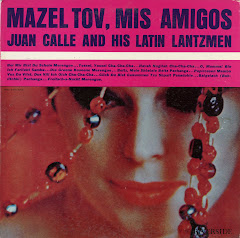
What does it say about us that we care less about the subject of Otto Preminger’s film about the founding of the State of Israel (which starred Paul Newman and was based on Leon Uris’ novel), and more about how everyone from Richard Clayderman to Edith Piaf and Count Basie thought it wise to take a crack at Ernest Gold’s rousing, chest-swelling main theme from the film’s score? Gold fled Vienna in 1938 and started making his mark as a film composer in Hollywood in the mid-forties. His Exodus theme was a huge, Oscar-winning hit in 1960, the perfect launch of a decade when Jews became synonymous with America– as Leslie Fiedler once put it, “when Zion became Main Street.” So much so that when it was time to add lyrics to “Exodus” the task fell to Daniel Boone’s great-great-grandson Pat. “This land is mine,” Boone wrote of Israel a year before the southern Church elder recorded his Reads From The Holy Bible LP, “God gave this land to me.” In 1969, Jimmy Scott (with Junior Mance on piano and Ron Carter on bass) did one of the most beautiful takes on the Gold/Boone version that was as much dirge as patriotic celebration, and four years earlier, the original Gold instrumental got one of its best workouts from Nuyorican conguero Ray Barretto on his Viva Watusi LP (Barretto had already worked the Jewish angle as a member of Juan Calle and His Latin Lantzmen). The other history of Israel: from Vienna to the Watusi via Pat Boone.

Thursday, August 7, 2008

Israel’s B-Side


Check out “Israel,” originally written by John Carisi back in that fateful year of 1948. This isn’t his version or Miles’, but the trombone duo of J.J. Johnson and Kai Winding who made it the title of their 1968 A&M stunner. Herbie Hancock, who also played on Jonathan Klein’s “Hear O Israel” session around the same time, was on board, as was Ron Carter and Grady Tate. In his Israel liner notes, Ira Gitler wrote, “Herbie Hancock shifts over the sands of Sinai with both hands before getting into some straight-ahead, right-hand swinging.” Even in 1968 it was still possible to score Israel with a level of sand-shifting calm and straight-ahead swing. Blues, for sure, but not the menacing, dark, tragic, suffering, embattled blues you’d have to score now. Of course, you could also just put on a real fantasy record, “Israeli Sha Sha” from the great Machito. At least Carisi heard the blues as a permanent Israeli score. Machito is pure romance, a tropical, playful Zionism swishing across a dancefloor that for these three minutes at least, has room for everyone. A sigh for the CNN ticker–if only politics actually sounded like this.

Wednesday, August 6, 2008

The Barry Sisters: Our Way


Claire and Merna were The Bagelman Sisters before they became The Barry Sisters and, soon after, the reigning queens of Yiddish swing from the late 30s on. Though best known for turning Yiddish folk tunes into jazzified pop hits (their purring “Tumbala-Lika” can still survive any tasteful DJ set), I’ve always liked them best when they go slightly off book, especially all of their impressive Spanish-language sides (check back here soon for those). But my fave Barry Sisters album comes when most thought their career had long fizzled, in 1973, when they released Our Way on the aptly named Mainstream Records. Instead of Yid hits in pop idioms, this time they did big pop hits in Yid idioms– “It’s Impossible,” “Mame,” “Love Story.” The best of the lot is this version of Burt Bacharach’s “Raindrops Keep Falling On My Head” (sung originally by BJ Thomas on the Butch Cassidy and The Sundance Kid soundtrack). In Yiddish, it became “Trop’ns Fin Regen Oif Mein Kop” and proved that even a dying language could save 70s radio from itself.

Tuesday, August 5, 2008

Middle Eastern Mann


Brooklyn’s own Herbie Solomon became jazz’s most hirsute flutist and devoted fusionist. Mann started on the clarinet as a Benny Goodman disciple, but then switched to flute to make his mark, mixing jazz with Afro-Cuban, R&B, funk, reggae, and most importantly Brazilian– he was one of the first US jazz musicians to collaborate with the likes of Jobim and the newly-hip-again Sergio Mendes. Before he died in 2003, Mann recorded Eastern European Roots which lacked the raw sizzle of his earlier work but which he talked about as a return to who he “really” was. I sure hope not. I’d hate to think that his roots voyage would erase all the other versions of Mann we got to meet– from trolling the “Memphis Undergound” to being a “Sultry Serenader” to hustling the “Discotheque” to having a bad case of “Latin Fever.” (Cue Carrie Bradshaw voice-over…)Does getting in touch with our roots negate all the branches? Is Jewishness just a one-way ticket? Plus, Mann may not have done Eastern European before, but he did do the Middle East on his killer 1967 album Impressions of the Middle East. The liner notes make no mention of Mann’s roots and don’t exploit any connection he might have had to the lands he visits here. There’s references to ouds and odalisques and Turkish coffee, the Jewish staple “Eli, Eli,” and this Mann original, “DANCE OF THE SEMITES”, which features Chuck Ganimian on oud, Mohamed Elakkad on zither, the always deft Reggie Workman on bass, and (DJs get ready) the Semitic percussion breaks of Robert Marashlian and Moulay Ali Hafid.

Monday, August 4, 2008

Genuine and Persuasive


Our favorite thing about Richard Hayman’s Genuine Electric Latin Love Machine album is the use of the word “genuine.” As if there were a slew of fake “electric latin love machines” flooding the market. And who better to offer a maraca-shaking Mexican robot in a sombrero as genuine than a Jewish arranger who started off as a harmonica guru before heading for the Boston Pops. Maybe that’s why the LP was subtitled “Persuasive Electronics.” There was some convincing to do. Hayman recorded this gem of Moog antics well after his stint with Borrah Minevitch’s Harmonica Rascals, a group which also produced Johnny Puleo, the harmonica shortie who would go on to do his own Jewish-hits-on-harmonica album. Love Machine was a first (and a last), a contribution to two crazes at once: the Moog craze and the Latin craze. As far as I know, it was a one-of-a-kind analog electro experiment, applying the tonal kaleidoscope of Moog oscillations to “The Peanut Vendor,” “La Comparsa,” and why not, “Hare Krishna.” Hayman lulls us with a version of “Scarlet Ribbons” writer Evelyn Danzig’s “Melody #2″ and goes hardcore on his own “Samba de Victoria”. Flip the album cover over, though, and you learn that even the latin love machine has limits, not to mention a whole history of stereotype to uphold. Unplug the robot and all you’re left with is another sleeping Mexican.

Sunday, August 3, 2008

That Levy Boy


There were plenty of Jews who got tangled up in the Latin music scene in the 40s and 50s, but only a few went for the name-change masquerade (think radio man Dick “Ricardo” Sugar). Alfred Levy could have become Alan Land but instead opted for Alfredito and morphed into a top percussionist on the NYC mambo scene. He gigged with Tito Puente and Joe Quijano before cooking up his own mambo unit that eventually got signed up to Tico Records (run by two of his lantzmen, George Goldner and Art “Pancho” Raymond). Early on Alfredito’s insider-outsider status produced tracks like this one, Chinese Cha Cha Cha which first appeared on Rainbow Records’ Alfredito Plays Mambo! 10″ and later as one of the “tantalizing rhythms” on Tito Puente’s Latin Spectacular LP showcase alongside cuts from Puente, Machito, Tito Rodriguez, Joe Loco, and Martino Savanto. In 1966, Alfredito went boogaloo for a Cotique release that showed him dabbling in Latin soul and R&B and even grabbing the mic. Here he does Sweets For My Sweet a classic from Doc “Jerome Felder” Pomus that was first made famous by The Drifters (even then it had a Latin shuffle to it), then covered by a host of folks including dubnaut Lee “Scratch” Perry.

Friday, August 1, 2008

Belle Barth: Uncensored


Pearlstein, Bernstein, Levitt, and Fink. Not a law firm, but a roll call of forbidden fruit, the “Nice Jewish Girls” who torture and taunt the Gentile bloodline of a young Loudon Wainwright III perhaps the most un-Jewish of all non-Jewish American singers. “Not Nordic names, I know,” he whines. It’s a short, odd ode to Country Day school boy-lust for the Other girls, the ones with the long names, the ones in the same tax bracket who hold out the mythical promise of exotic possibility somewhere deep in the suburbs. Jewish girls don’t usually get a good rap in pop culture– the wallet-draining, life-ruining, soul-stealing Jewish American Princess archetype has pretty much held Jewish women in a representational stranglehold for decades– and his song is no Jewish feminist anthem, but at least it’s momentarily celebratory. Plus, Wainwright comes off as the deprived and depaved one here. He may have the blue-blood, but they make his “juices flow” and by the song’s end, he sounds desperate for what he can’t have, like he’d do anything for them, like he’d stalk their Shabbas dinners, like he’d memorize Funny Girl, like he’d have a poster of Grace Adler on his dorm room wall (if she’d been invented yet). I’ve always wondered what would have happened if Wainwright had added Salzman to his Hebraic Hall of Fame– Annabelle Salzman to be exact. In the 50s and 60s, Salzman became the bawdy wonder Belle Barth, the gruff, potty-mouthed queen of a not-so-nice-Jewish-girls court that also included the likes of Pearl Williams and Patsy Abbott. Barth was a working-class trash-talker who worked nights in Miami Beach and Manhattan, sitting in front of the piano, singing about shmucks and oral sex, dishing insults at the insurance men in the front row. “If I embarrass you,” Barth liked to say, “Tell your friends.” Wainwright would have been on the next train back to Westchester.